

If you’ve ever been around horses, you’ve likely heard the golden rule of barn safety: Never walk directly behind a horse.
It’s often passed along as a strict warning—"because they might kick!"—but few people explain why a horse might react that way. It isn't because horses are naturally aggressive or mean. In fact, it comes down to a fascinating evolutionary trait: how equine vision actually works.
Understanding how a horse sees the world changes the way you interact with them, helping you feel more confident, calm, and connected during your time in the saddle.
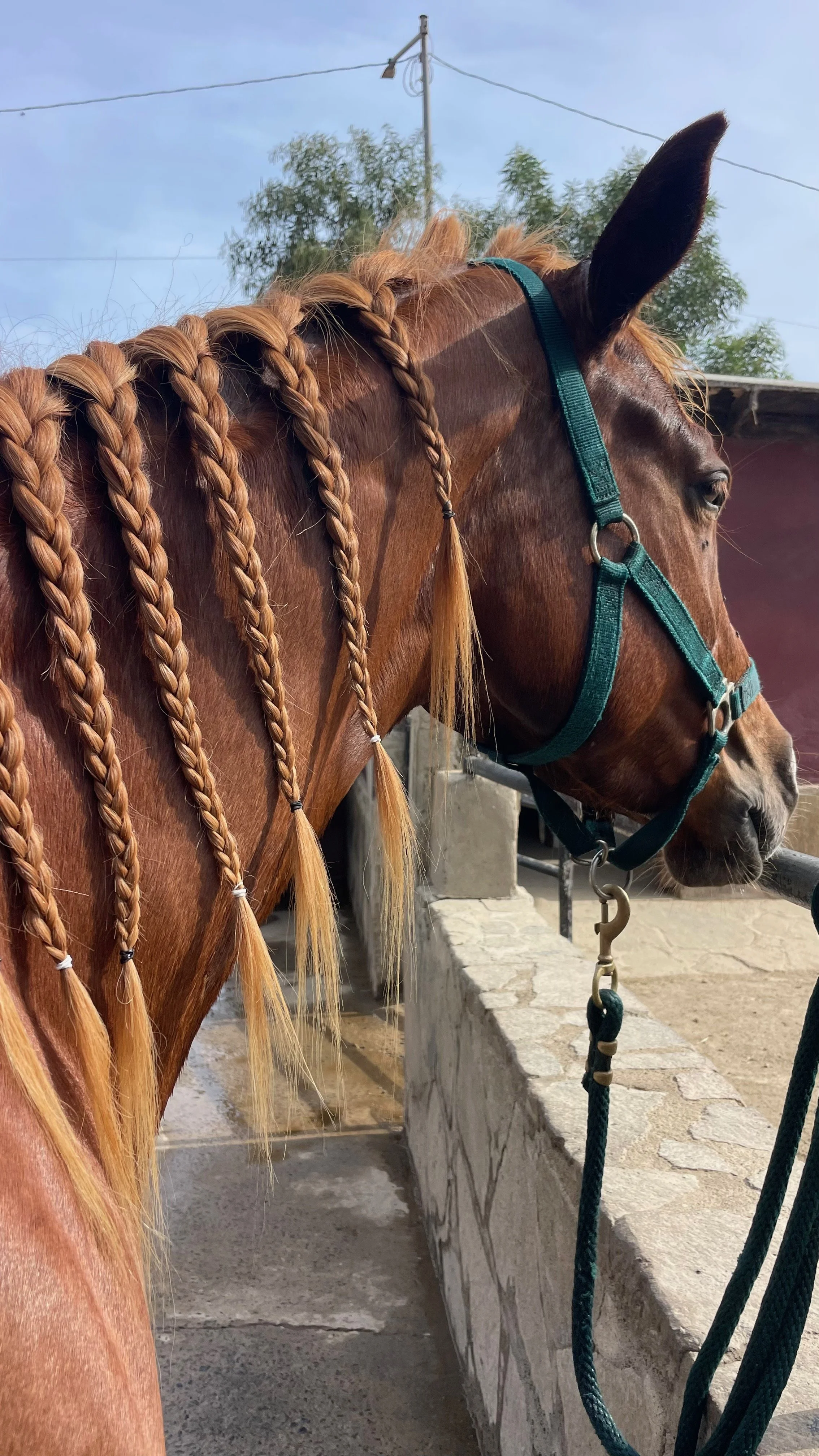
Panoramic Vision with Two Surprising Blind Spots
Because horses are prey animals in nature, their eyes are positioned on the sides of their heads. This gives them an extraordinary field of view—they can see nearly 350 degrees around their bodies without ever turning their heads!
However, that wide layout leaves them with two very specific blind spots:
Directly in front of their nose (about 3 to 4 feet straight ahead).
Directly behind their tail (a blind cone extending directly behind their haunches).
The "Startle Reflex" in the Blind Zone
When a horse is standing quietly and someone approaches quietly from directly behind, the horse cannot see them. If they suddenly feel a touch, hear a sudden rustle, or sense movement entering that rear blind spot, their natural survival instinct kicks in before their brain has time to process what it is.
To a horse, an unseen surprise from behind feels like a potential predator. Their immediate reflex to protect themselves is to deliver a quick kick backward.
How to Safely Walk Around a Horse
At Horses by Jose, safety and trust are at the heart of everything we do. You don't need to be afraid of moving around your horse—you just need to let them know where you are!
Here are three simple tips our guides teach every guest:
Talk to Them: As you step around your horse, use a quiet, soothing voice ("Easy boy," "Hey buddy"). Hearing your voice lets them track your position even when they can't see you.
Keep a Hand On Their Haunch: When passing behind your horse, place a gentle, rested hand on their hip or hindquarters as you walk around. This physical touch gives them continuous feedback on exactly where you are.
Give Extra Distance: If you aren't touching them as you pass, leave a generous buffer—at least 6 to 8 feet—so you are completely outside their kicking range.
Knowing how horses see and process their environment turns simple safety rules into a deeper understanding of horse body language. Next time you're at the ranch, take a look at where your horse is focusing—you might be surprised by how much they're noticing!