

Have you ever wondered what your horse is feeling while you’re out on the trail?
Horses are masters of non-verbal communication. Long before a horse utters a sound, they are constantly sending subtle signals through their body posture, tail movement, and—most noticeably—their ears!
Learning a few basic elements of equine "body language" allows you to tune in to your horse's mood, making your ride smoother, safer, and far more rewarding. Here is your quick guide to decoding what your trail partner is telling you.
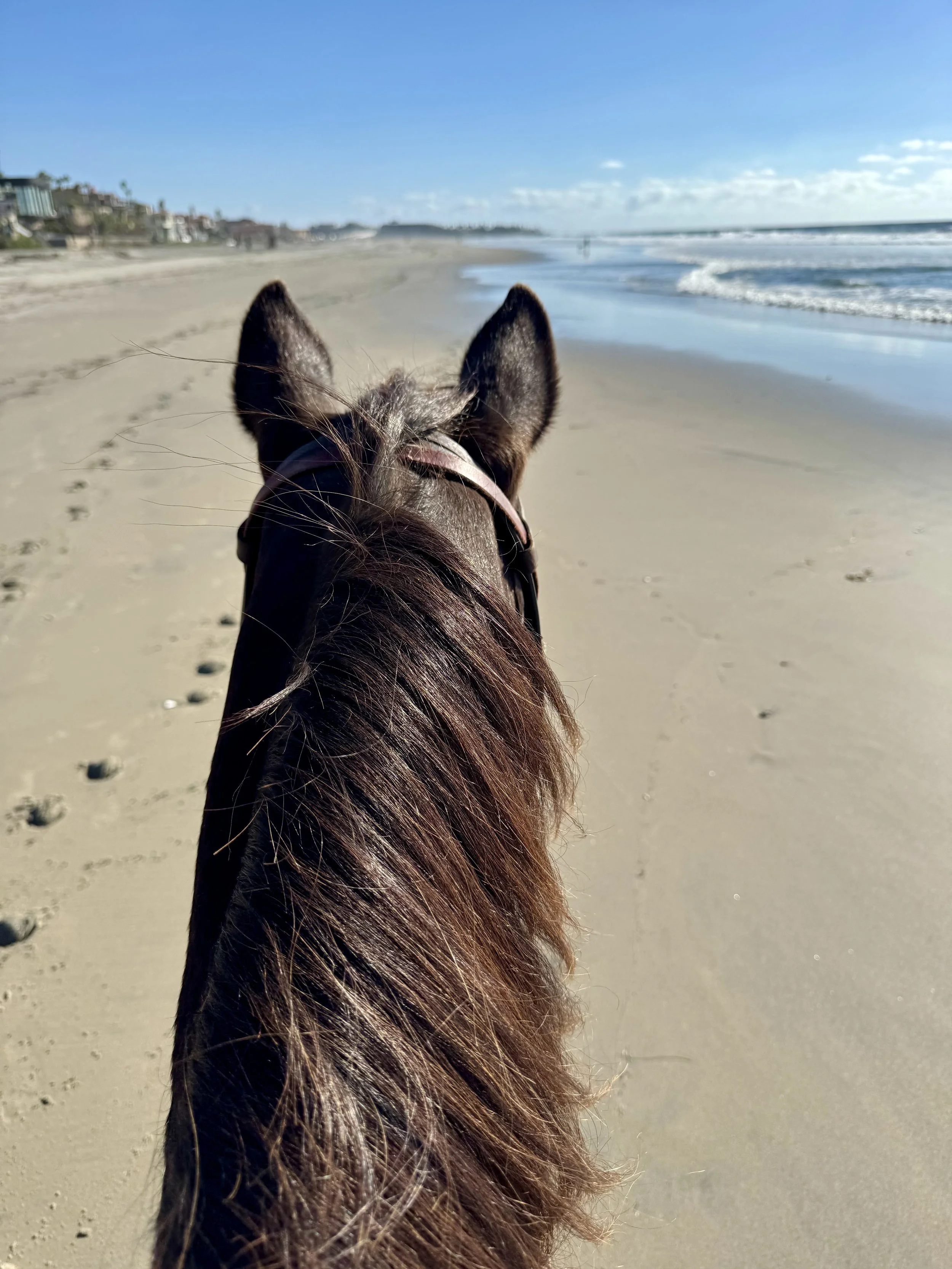
The Ears: Your Horse’s Radar Dishes
A horse’s ears can rotate almost 180 degrees using 10 different muscles, functioning like little satellite dishes tuning into the world around them.
Pricked Forward: Both ears pointing straight ahead mean your horse is curious, alert, and interested in something down the trail—like a passing bird, a ocean wave, or a bend in the river.
Swiveling Back and Forth: One ear pointed back toward you and one pointing forward means your horse is multi-tasking! They are paying attention to the trail ahead while listening closely to your voice and cues.
Pinned Flat Back: Ears pressed tightly against the neck indicate annoyance, frustration, or a clear warning to another horse to back off. (Our guides continuously manage herd spacing so everyone stays relaxed!).
The Face and Mouth: Signs of Relaxation
Pay attention to your horse's muzzle and jaw line when you stop along the trail:
Licking and Chewing: If your horse stops, licks their lips, and makes a quiet chewing motion, it’s a wonderful sign. It means they are processing new information, releasing physical tension, and feeling calm.
A Droopy Lower Lip: A soft, slightly hanging lower lip means ultimate relaxation. Your horse is completely at ease in their environment.
The Tail and Posture: Understanding Energy
A Soft, Rhythmically Swishing Tail: Natural swishing usually just means brushing away a stray fly or keeping rhythm at a walk.
A Resting Hind Leg: When standing still at a scenic spot, you might notice your horse cocking one hind hoof on its toe. This means they are resting their weight and taking a peaceful break right alongside you.
Building a Two-Way Conversation
When you ride at Horses by Jose, you aren't just steering a trail mount—you are participating in a quiet dialogue with an intuitive animal. Watching their ears shift as you speak to them or feeling them relax under your seat is where the real magic of horseback riding lives.